Archive | February, 2013

Where do you look when someone doesn’t have eyes?

8 Feb

“what you need and what you want aren’t the same things,”

― Cherise Sinclair, The Dom’s Dungeon

Three weeks after we took Oli to LA to get her first pair of conformers we took her back to get her second pair. She was very fortunate because her right eye (the empty socket) actually stretched a considerable amount. The ocularist was able to fit her with a conformer twice the size of the first one. Sometimes conformer therapy just doesn’t work and kids are never able to wear them.

“So. . .Mr. Haddad, when are you going to lose the awful pegs and put flat painted conformers in? Next month? A couple of months at most, right?” I am incredibly impatient.

“No. It will actually be 2-3 more months before I can put a flat conformer in that right eye. It’s just too small. I wouldn’t be able to get it in or out of her eye without that peg. And she will probably be close to her first birthday before we put painted ones in that look like real eyes.” He explains quietly.

“Oh. That long huh? I guess that’s okay.” I almost start crying.

I was screaming inside my head,

No. No. No! That’s is absolutely not okay. I want to look into her eyes! Fake or not. I should be able to look into her eyes!

Where do you look when you are speaking to someone if you can’t look into their eyes?

To me, eye contact was very important. It showed people that I was paying attention, interested in what they were saying, and respectful. I could gauge their feelings and reactions to what I was saying when I looked into their eyes.

I had to learn with Oli that I could still do all of these things with her, in a different way.

I learned the delicate map of her facial expressions. The raise of her eyebrows and the little bit of furrow between them when she was listening. Her toothless smile, scrunched up nose and the turn of her head when she was happy.

HPIM1949
Her tightly pursed lips turned down at the corners when she was sad.

I learned to look at her whole face and body language to gauge her reactions and feelings. I learned to read her without making eye contact, but with the complete confidence that I knew her emotions.

I learned that I really didn’t need to see her eyes to make a connection with her.

I learned all of this. . .but it never changed the fact that I wanted her to have eyes. Real eyes, fake eyes, glass eyes, plastic eyes. I didn’t care. I wanted her to have them.

What about me mom?

7 Feb

“A sister is God’s way of proving that He doesn’t want us to walk alone.” -Anonymous

Apparently I have seriously offended one little person in my house by not writing about her yet. When I picked Kekoa up from school yesterday I excitedly told him that I was able to tell a story about him on a website.

“What’s the story about mommy?”

“I just told people what an amazing person you are and how much you love your sister, Oli.”

At this point I hear a little voice pipe up from the back seat.

My 2 year old Ginger, is not about to be left out.

“Me too mom! You wrote a story about me too!”

She is far to grown up and sophisticated to use silly words like ‘mommy’ and ‘daddy’. We are mom and dad and sometimes, we are Shannon and Seth.

“Not yet Ginger. I haven’t gotten to that part of the story yet.”

“Awwww….I want a story.”

So now I find myself needing to write about Ginger. Although it in no way follows the normal sequence of Oli’s story, I have to tell you about my little princess. She is not about to be left out, let alone not be the center of attention.

This is Ginger.

Ahhhhh….Ginger. Where do I even begin?

Ginger was born when Oli was 2 months away from being 3 years old. I thought that it would be easy to have another baby at this point because Oli was getting a little bit older.

I was wrong.

To describe Ginger as being a difficult baby really doesn’t accurately portray the first 5 months of her life. I had no idea what I was in for when she was born.

She was a terrible infant. She cried all the time. And I do mean ALL THE TIME. Literally. If she wasn’t eating (which she always did) and she wasn’t sleeping (which she never did) she was crying.

Oli had a really hard time when she was born. She is very sensitive to loud noises and Ginger screamed like she was in a special baby crying contest and was intent on winning first prize. I’m sure my neighbors were convinced that I was somehow torturing my newborn.

We found out when she was 1 year old and stopped nursing that she was allergic to milk. She would break out with a rash all over her face every time I gave it to her.(I’m sure she was sensitive to breast milk too.)

Yeah. . .that would have been good to know when she was a baby.

Oli really wanted nothing to do with her. Every time I would try to put Ginger in Oli’s lap or even next to her, she would push her away immediately. I couldn’t blame her. Sometimes even I couldn’t handle her screaming anymore. But by the time Ginger was 5 months old she was much better.

I couldn’t convince Oli to like her though. I’m sure she had no idea what this little loud thing was. She’d never been around a baby before. So, one minute it was just her and Kekoa and life made sense. She had routines and structure and plenty of mommy time. The next minute she had erratic routines, no structure and mommy time usually meant sitting with me while I had a wiggly little body attached to my boob. It took Oli about 18 months to let Ginger get near her and now she loves her. But that was only because of how Ginger approached and treated her.

The personality differences between my oldest and youngest children are striking. They are polar opposites.

Where Kekoa is quiet and sensitive, Ginger is loud and bossy. Kekoa wants to help other people and never strives to be the center of attention. Ginger just wants everyone to cater to her and will do whatever it takes to make sure that someone is watching her. She is constantly singing, dancing, and performing. And if what she is doing is not immediately grabbing your attention she will get in your face and absolutely demand it. And that is exactly how she approaches Oli.

She just grabs her by the hand and pulls.

“Oli! Come play with me!”

(Oli has a lot of trouble standing up by herself.)

“Ginger, you can’t just pull on Oli. You’re not strong enough to help her get up.”

She will not be detered.

“Yes I am mom. See. Look at my muscles!

Come on Oli! Stand up. Let’s go.”

IMG_1324[1]

She has never ever treated Oli like she is any different from anybody else. I would like to explain this away by her age. She just doesn’t understand yet. (She will be 3 in March.) I don’t think that’s it though. Only because I have always watched how Kekoa interacts with Oli.

Kekoa is more reserved with her and always has been. He is concerned that things are done properly with Oli and he is always cognisant of her visual impairment and her mental age. He has been like that since she was born. He doesn’t ever treat her like she is less than, but he is aware that there are things that she just can’t do or needs help with. I frequently hear him tell Ginger,

“You have to put the toys in her hands Ginger. She can’t see them when you just throw them at her! Put them in her hands!”

Kekoa wants to teach Oli things and makes sure that she gets what she needs.

Ginger wants Oli to pay attention to her. Ginger just wants to make sure that they are friends.

I really love this about her. I don’t have a sister so I know nothing about the special bonds of sisterhood.

I see it in my girls though. Despite their differences I see that bond.

Oli is so lucky to have two people who will always stand by her side. One who will make sure that no harm ever comes to her and the other who will make sure that no one ever leaves her out, pity’s her, or treats her differently.

Emergency items are required!

7 Feb

“Having a child is liking getting a tattoo…on your face. You better be committed.” ~ Eat Pray Love screenplay

When Oli was born I got a crash course in packing for a child with disabilities. And it wasn’t only the trips to LA that provided me with my learning experience. We still lived an hour away from Las Vegas at that time, which is where all of her regular doctors and specialists were located.

I have learned over the years that the amount of stuff Oli has to have to go anywhere has not decreased in proportion to her age as it usually does with children. If anything I think it has actually increased.

When she was a little baby I had to make sure to remember to pack diapers, bottles, the mommy torture device, er… I mean breast pump, and a couple changes of clothes for her AND me. She had really bad reflux and was prone to soaking both her and I with sour partially digested milk. On that note, I also had to remember to bring lots of wet wipes and never forget the bulb syringe. While driving I had to keep a close eye on her in the review mirror in case she had a particularly bad bout of reflux. The milk, and later her baby food, would come up and out her nose in which case I had to immediately pull over and perform the very precarious operation of baby nose sucking.

As an older baby she required diapers, wipes, food, clothes, toys and a good song on the radio.

As a toddler these same items were required and we added in a few extra things. The toys we had to bring got more interesting and had to be MacGyvered into our car and hung in a way that she could always find them and know where they were. Young blind children have no concept of item permanency. When a blind baby drops something it just magically disappears into space. Once it’s out of touch with their little hands, in their minds, it’s gone. Poof!

The binky. It was a major disaster if I forgot to bring the binky. I still find myself in a moment of panic when I realize that we are out and I did not bring the one item Oli needs to soothe herself. No binky could potentially ruin a car trip, a nice dinner out, a shopping trip, or any other function that requires my girl to sit nicely for longer than a few minutes.

Going out or on a road trip now forces me to do a medication check list. Has she had her seizure medication? Check. Her drooling medication? Check. Emergency seizure medication in the bag? Check. Prilosec been given for her reflux? Check. Are we staying over night? Then we need more seizure medication, more drooling medication, more Prilosec, and THE MOST IMPORTANT MEDICATION…..

the sleeping medicine. I absolutely CANNOT forget the sleeping medicine if we ever stay over night somewhere. This would be very very bad. Trust me.

She also needs her little potty seat. Even though she’s not fully potty trained I’ve been taking her to the bathroom since she was two. And my girl absolutely insists that I take her poop on the potty.

She needs little toys that I can stick in her bag. Things to entertain her in restaurants, waiting rooms, or in the grocery cart. Like dolls with yarn hair or small blankets that she can flap around. She loves this.

Snacks! My girl absolutely loses her mind when she is hungry! I mean sometimes I think she has been possessed by a demon. Her head starts spinning, she starts snarling and clawing. I’m thinking what is wrong with this child. People in close proximity to her are backing up and grabbing the cross hanging around their neck. And then I realize she hasn’t had a snack in two hours. I only have a two hour window between meals and snacks and then Oli apparently thinks she is starving to death and is convinced that I will never feed her again. Yes, snacks are very important.

Drinks. She has only a slightly more docile reaction to feeling thirsty.

Boogie wipes are also a necessity. She always has a runny nose and they are great for cleaning the bit of maka pia pia (eye sand) from the corner of her eye.

The stroller in case she comes down with a case of floppy spaghetti legs and refuses to walk.

Q-tips. Oh my gosh, I almost forgot to write about Q-tips. Not for her ears either. These are for her eyes. Sounds strange I know but, try fixing a rolled prosthetic eye with your big clumsy fingers. Impossible. Q-tips work perfectly and I am proud to say that I offer training opportunities frequently for Oli’s new teachers and therapists. I probably have personally funded vacations for the CEO’s of Uline with my frequent Q-tip purchases. Well, okay, maybe I haven’t bought that many boxes. But I have bought a lot!

I’m sure there are many things I am forgetting but it seems like I’ve covered the emergency items needed for a trip “to the outside world” with Oli.

Memorizing the Cars Movie was not an aspiration of mine.

6 Feb

“Love doesn’t make the world go ’round. Love is what makes the ride worthwhile.” -Franklin P. Jones quotes (American Businessman, 1887-1929)

Our first trip to see the ocularist in LA was just a little traumatic…for me. Oh, you were worried about Oli? No, she was fine. I mean she cried a little bit when her ocularist Mr. Haddad first put her new conformers in but, it only took literally about 5 seconds for each eye. At least for her first set.

As her eyes stretched and the conformers got bigger sometimes it was hard to get them past her eye lids. She has only had a couple sets that were really difficult to get in. Once they are in they’re not painful.

Well, wait, I guess I don’t know that they’re not painful since she can’t tell me. I don’t think they are though because Oli doesn’t try to claw my eyes out or maim me in some way which is what she does when she is in pain.

The trips to see Mr. Haddad, and later his partner Beverly, were exhausting. We drove 6 hours (one way) to Hollywood, CA from Las Vegas every 3-4 weeks. We were usually gone about 14-16 hours total because of the time it took to snail through traffic in Los Angeles. We never stayed over night because it was just too expensive and usually one of us had to work the next day.

We took both children with us every single time. Kekoa was 19 months old when we went the first time and Oli was 2 months. To say that it was a little stressful sometimes would be an understatement. But that is what Oli needed so that is what we did.

Thank God for little portable TV’s you put in the car. However, if I never hear or see the movie Cars again it will be too soon. Kekoa watched that movie at least twice every time we went, for 2 years.

I’ll let you do the math.

Let me tell you, you get to know your spouse far more than you ever really wanted to cooped up in a small car with 2 crying children for that many hours. Driving that far so frequently was not without humor either.

I remember one night (actually the wee hours of the morning) we returned home after one of our trips. Seth got into the shower and then immediately laid down in bed and passed out. I was still awake reading when he shot up and out of bed in a panic 30 minutes later.

“Seth! What’s wrong? Are you okay?”

“I almost crashed the car Shannon! I almost crashed!”

“What?”

Apparently he was dreaming that he was still driving and thought he had fallen asleep at the wheel. It was HILARIOUS!

I know when he reads this he will give me his usual response to my rendition of this story.

“Shannon, it was NOT funny.”

It was.

I also want to dispel a common myth about Oli’s “glass eyes”.

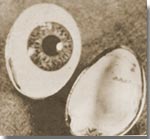
They are not made out of glass any more, they are made out of acrylic. There, now you know. It bugs me when people say “glass eyes” I don’t know why, it’s silly. I know…I have issues.

Here is a little history about prosthetic eyes courtesy of Oli’s new ocularist Randy Trawnik.

A Brief History of Ocular Prostheses

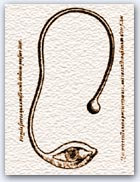
The art of making artificial eyes has been practiced since ancient times. Egyptian priests made the first ocular prostheses, called Ectblepharons, as early as the fifth century BC. In those days, artificial eyes were made of enameled metal or painted clay and attached to cloth and worn outside the socket.”
photo_history_1

The first in-socket artificial eyes made in the 15th century were made of gold with colored enamel. In the latter part of the sixteenth century, the Venetian glass artisans discovered a formula that could be tolerated inside the eye socket. These early glass eyes were crude, uncomfortable to wear, and very fragile. Even so, the Venetian method was considered the finest in the world. They kept their methods and materials secret until the end of the eighteenth century.
photo_history_2
In the 17th century the center for artificial eye making shifted to Paris for a time. Improvements in techniques and materials followed. The French word oculariste was given to the makers of artificial eyes.

photo_history_3

In the mid-nineteenth century, glass artisans in Thuringia, a region in eastern Germany, developed a superior glass formula for the making of artificial eyes. Combined with their techniques of blowing hollow glass objects, the center for glass eye making moved to Germany. The methods of making hollow kryolite glass prosthesis are still used today in Germany and many parts of the world. Glass eye making was introduced in the United States in the mid 1800’s by immigrant German ocularists. Although the American Ocularists of this era continued to make glass prostheses, the kryolite glass material itself was exported from Germany.

The onset of World War II cut of the export of kryolite glass to the United States. With so many injured soldiers needing artificial eyes, the U.S. government searched for a replacement material. Almost immediately the new plastics industry came to the rescue. Medical plastics were already being used in the dental field before World War II. The Department of the Navy set up a crash course in applying plastics to the field of Ocularistry that lead to the development of medical grade acrylic plastic and its use in eye-making. Combined with the use of impressions in the design of the artificial eye, modern prostheses can be perfectly fit for each individual patient. The popularity of these methods has continued to increase over the years. Today the vast majority of patients all around the world wear ocular prostheses made of acrylic.

OMG!! What Did You Stick In Her Eyes!!

5 Feb

“No one is more insufferable than he who lacks basic courtesy.”
― Bryant McGill

HPIM1905

Although talking with these moms helped me tremendously, no one could have prepared me for the calamities of conformer therapy. I described the evaluation as being “awful” so to find a word describing peg conformers is difficult.

Horrendous, horrific, saddening, a catastrophic emotional disaster for an already emotional mother walking a very fine line between a healthy dose of hope and normalicy and a very unhealthy obsession pretending what if…

Peg conformer therapy walked me through new trials and tribulations and reminded me frequently that I did not possess thick skin.

These conformers were not pretty.

It looked like I had shoved little glass sticks in my baby’s eyes.

HPIM1907<a

"What did you stick in her eyes?" I actually had someone say these words to me.

"OMG! What did you stick in her eyes? Poor baby!"

As she clutches her chest and looks at me like she is about to call child protective services.

“Nothing! Nothing. I didn't put those in her eyes. Well, technically I did I guess, but only to help her.”

I start spouting off unsolicited information about her eye condition. Letting this woman know that Oli was born without eyes and that I drive her to California every 3-4 weeks and actually pay a professional to put these ghastly things into her eyes.

I am giving her way too much information at this point and now she is looking at me like instead of calling CPS she is thinking of calling the local psych hospital.

Well, serves you right lady! Don't say things like that to me. I'm sensitive!

Who says things like that to people anyway? I would never…

I was taught very young "Do unto others as you would have others do unto you". Thank you Mr. Snell circa 1985-1990. He was my elementary school principle and always closed the morning announcements with that lesson. I frequently hear that phrase repeated in my head in Mr. Snell's deep friendly voice. More frequently now that Oli has been with me.

As for spouting off unsolicited information about Oli, I still do this.

I'm going to make her a T-shirt that says "I'm just fine, but my mommy has issues!"

What did I do before Facebook?

4 Feb

“Friendship is born at that moment when one person says to another: “What! You too? I thought I was the only one.”

― C.S. Lewis

As I struggled to understand what the doctors were telling me, looking up every unfamiliar word, phrase, and condition, I was also furiously searching the Internet for other families who had kids with Oli’s condition.

There had to be more of us out there! Where were they? This was pre-facebook when it was not as easy to find people or support.

Finally I stumbled across a Yahoo online support group for families of anophthalmic/microphthalmic children. I submitted a request to join the group explaining that I had a one month old daughter with the condition.

I was silently begging this woman on the other side of the country….

Please, please accept me. Please tell me that you can help and that you understand.

I received an email the next day telling me to follow the link to the online forum. I waited until everyone in the house was sleeping before I went back online.

With the darkness of the house surrounding me I was looking into a new light, a new hope via my small computer screen.

I clicked on the link and walked into a whole new world. A world in which my child was no longer a small minority with a strange condition. A place where I was no longer just one mom alone on this foreign voyage. I had found the hope and the sense of community that I had been looking for.

I read through numerous conversation links and looked at handfuls of photographs of children who looked like my Oli. Beautiful children with positive and inspirational parents who told me not to be discouraged. They told me that they too lived my story. My life, her life, her future was not to be without hope. I could be myself with them. I could be angry, express my grief, my sense of loss. I could tell them about the strange looks that people gave my daughter. I could tell them how annoyed I was when people thought Oli was sleeping because she couldn’t really open her eyes. They understood because they too had the same experiences.

They knew me and they knew my struggles. I never had to pretend with these women. In the months to come I clung to my computer screen in the darkness and welcomed that light. I asked many questions and always received honest and compassionate answers. I found friendship in a most unlikely place. With women I would never meet. Most of them have never heard the sound of my voice, invited me over for coffee or out to lunch. Most of them were just names on the computer screen. But, those women knew me in those early days. They knew me better than some of my closest friends because I told them how I really felt.

I never told them that I was fine.

Growing up with Oli

4 Feb

IMG_1076“You are here in order to enable the world to live more amply, with greater vision, with a finer spirit of hope and achievement. You are here to enrich the world.”
― Woodrow Wilson

I have often wondered what it is like to be a sibling of a child with a disability. I know it’s an adjustment for any child when a new baby is brought into the house. But, what about the child whose life is forever changed beyond just having another little person to live with. It is so much more than parents now being more preoccupied with feeding routines, frequent diaper changes and crying episodes. And it’s more than just knowing that you now have to share mommy and daddy’s attention with a new sister when, well lets face it, you probably weren’t all that thrilled about her joining you. Especially since you were an only child up until now.

Your life changes because now life is riding in the car for hours and then sitting in little rooms with crappy toys and being told to “be quiet” while you try to wait patiently. It’s waiting in these rooms several times a week when all you really want to do is go back home and play with your toys and watch the Cars movie…again. It’s sensing the atmosphere change in your house and feeling the weight of a sadness that you don’t understand but, seems to have followed your sister home from the hospital. The weight that seems to intensify after waiting in another one of those little rooms.

As you get older you start to notice that your sister, who you have waited to play with since she was born, never seems to get old enough to play like you. She doesn’t sit up very well when she does learn to sit up and then she can’t see when you try to show her your newest Lightening McQueen car or your new Hot Wheels race track. Mommy tells you to put your toys in her hands to show her things, but frankly this doesn’t make sense either because then she only puts your new toy in her mouth and ruins it with slobber. She never learns to move around the house which means mommy has to carry her every where. The words “Oli just needs more help” are lost on you when you just want to be picked up and carried around like before. You love your sister but, just don’t understand her. You ask questions and want to know why she is so different than you but, mommy’s explanations that God made her different don’t make sense. Why can’t the doctors just make her better. She is obviously sick and this is what doctors do. Why doesn’t she ever get any better? Why do they keep taking her to the doctor if they don’t fix her?

As you grow and change, learn your letters, learn to count and tie you shoes you try to show your sister so she can learn too. But, your attempts are to no avail and she doesn’t seem to get it. She won’t talk to you and now you are drifting farther and farther apart. She starts to do strange things like flap her arms, hum loudly and shake her head. You try to play like her to connect with her in some way but, what seems to amuse her is just boring to you.

You never give up though. You never give up trying to form that connection with her.

She is your sister despite your differences. Mommy and Daddy have always taught you to love her and help her and that is exactly what you do. Not so much out of a feeling of obligation but, because that is just who you are.

Kekoa you are such a special little boy. I love that you just love her and even though it’s been 5 years since everything in your life changed, it has never dampened your spirit or your love of your family and life. Please keep your kind heart and don’t pay any attention to people who may try to lead you down a different path.

You, my son, are going to change the world.

Yes. Sometimes I do hide in closets.

3 Feb

images (7)
I find it so odd that when I first meet people and tell them that I have a special needs child their first response is either A: God gave her to you for a reason. Or B. You must be a wonderful mother.

I already explained why I find A hard to comprehend when I described me and my experience when Kekoa was born. And B, how in the hell does having a special needs child = being a good mom? I am a wonderful mom, but it is not because I have a child with disabilities.

Is it because I love, take care of, feed, water, and provide for her? Because I’ll tell you, I also do those things for my cat.

Is it because I haven’t run for my life when it gets to be too much or locked myself in a closet somewhere crying and banging my head against the wall? Because I have found myself in many closets. Just not for very long. And as for running away, I did take a 30 day hiatus one time. I just came back and I came back a better mother.

imagesCAPB40ZS

Maybe it’s because a lot of people could just never imagine having a disabled child? I understand that. But you can’t meet me for 5 minutes, learn that I have Oli and then jump to the conclusion that I am amazing.

Maybe I just unknowingly emit good-mother-vibes?

Or maybe it’s just a pity statement and they are really just looking at me like “Boy am I glad that I’m not you!”

I understand that too.

Whatever the reason, special needs mom does not in any way equal good mom. There are many kids, disabled and not, living horrendous lives that I probably can’t even fathom. And there are plenty of kids out there in the world with disabilities that are homeless, in orphanages, shelters, institutions, and foster care with mothers who have left for various reasons. Maybe they were young, in a bad relationship, had mental health issues, or just couldn’t handle it. And some of them may in fact be horrible mothers.

But many of them are probably not. Maybe they did the best they could.

For some reason it just irks me to no end when I hear about a child with disabilities not living with his parents and people automatically jumping to the conclusion that their mother didn’t love them or that she must have been a monster. Maybe she was but, maybe she wasn’t.

Just like me loving Oli and raising her does not equal wonderful mom. Giving up a child with disabilities does not always equal bad mom either.

Back to this whole, “You must be a great mom” business, I realize that people just don’t know what to say. But, I’m not looking to hear anything profound.

I tell people about Oli because I want the people who meet me to know part of what makes me, me.

And I feel the need to give a disclaimer because they might see me again in the future crying and looking for the nearest closet.

Oli is just a little quirky.

3 Feb

imagesCACDUX03
“Sometimes you just need to look at life from a different perspective.” -Unknown

As the first few days of Oli’s life turned into the first few weeks, results began to trickle in from Oliana’s many tests. And I do mean trickle. Sometimes it seemed to take forever to hear anything back. I guess I can sum up what most of those tests found by saying, they were pretty normal, except… not completely.

My sweet Oli is just kind of quirky.

The cardiologist said that her echo was normal except for a few things. Oli’s first quirk. The right ventricle in her heart was a little larger than normal and there was a small hole in her heart that should have closed when she was born, except that it didn’t. It was very minor.

She had a repeat pelvic ultrasound to check her kidneys. They still had extra fluid in them and then the doctor threw in a bonus quirk. She had 2 uterus’s.

What? I’d never heard of that either.

I was starting to think that I should have paid more attention in nursing school.

Of course, as soon as I got home I Googled “two uteruses”.

Have I mentioned how much I love Google?

Apparently this is not all that uncommon.

Google told me that the there were two draw backs.

Sometimes when a woman with two uterus’s gets pregnant the baby can be born preterm because the uterus’s do not stretch to the size of one normal uterus. The baby runs out of room.

The second draw back was that it is possible for a woman to get pregnant at two different times and have pseudo twins. A baby in each uterus.

Well, Google. I’d say those are pretty big drawbacks!!!

A trip to the endocrinologist revealed that her pituitary labs were normal, except her pituitary gland did not look normal on the MRI. He said that her posterior pituitary gland was ectopic. Which just means that it wasn’t in the spot that it was supposed to be. Oli has had a few more MRI’s since then and I have heard many different opinions about how her pituitary looks.

Is it moving? Changing? Mutating? I have no idea.

I don’t think anyone really has a definitive answer as to what is wrong with the appearance of that gland.

I told you she was quirky.

The rest of the MRI results were normal except….(Yep. You guessed it) for a few things.

Apparently she did not have an optic chiasm or a pineal gland.

Are those important?

Here is what Google tells me about these VERY important pieces of her body.

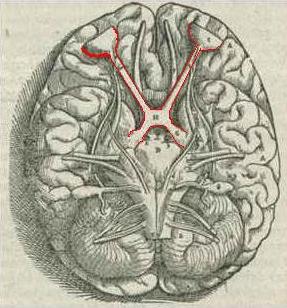
1543,Visalius'OpticChiasma (2)
The optic chiasm or optic chiasma (Greek χίασμα, “crossing”, from the Greek χιάζω ‘to mark with an X’, after the Greek letter ‘Χ’, chi) is the part of the brain where the optic nerves (CN II) partially cross. The optic chiasm is located at the bottom of the brain immediately below the hypothalamus.

The images on the nasal sides of each retina cross over to the opposite side of the brain via the optic nerve at the optic chiasm. The temporal images, on the other hand, stay on the same side. This allows the images from either side of the field from both eyes to be transmitted to the appropriate side of the brain, combining the sides together. This allows for parts of both eyes that attend to the right visual field to be processed in the left visual system in the brain, and vice versa. This is linked to skin sensation which also reaches the opposite side of the body, after reaching the diencephalon (rear forebrain). This decussation (crossing) is an adaptive feature of frontally oriented eyes and therefore having binocular vision. (Some animals, with laterally positioned eyes, have little binocular vision, so there is a more complete crossover of visual signals.)

Beyond the optic chiasm, with crossed and uncrossed fibers, the optic nerves become optic tracts. The signals are passed on to the lateral geniculate body, in turn giving them to the occipital cortex (the outer matter of the rear brain).[2]

250px-Illu_pituitary_pineal_glandsThe pineal gland (also called the pineal body, epiphysis cerebri, epiphysis, conarium or the “third eye”) is a small endocrine gland in the vertebrate brain. It produces the serotonin derivative melatonin, a hormone that affects the modulation of wake/sleep patterns and seasonal functions.[1][2] Its shape resembles a tiny pine cone (hence its name), and it is located near the centre of the brain, between the two hemispheres, tucked in a groove where the two rounded thalamic bodies join.

The MRI also showed that her optic nerves are so extremely small that they can hardly be visualized. In a few years, they weren’t visualized at all.

And that folks is one reason why my girl does not see and a BIG reason why she does not sleep!

You’re probably not a special needs parent if….

2 Feb

1. You have money.

2. You drive a small car.

3. You drive a nice car.

4. You don’t know what IEP stands for.

5. You don’t have a small panic attack, cringe, or cry when you hear the word IEP.

6. You go out to eat at restaurants and stay longer than 20 minutes.

7. Going out to eat does not mean going through the drive through at McDonalds.

8. You regularly enjoy meals without someone spitting a mouthful of chewed mush all over your shirt and then clapping and laughing. This is not done by your baby.

9. Your purse doesn’t weigh 5,000lbs and include things like emergency medication syringes, extra-large diapers, special snacks, multiple packs of boogie wipes, or weird toys.

10. Your wallet isn’t bursting with business cards from doctors, specialists, therapy places, schools, and support groups.

11. You never get emails titled “Sale! Feeding chair only 1 million dollars (regularly priced at 5 million)”

12. You don’t schedule your day based on what kind of mood your child is in.

13. You can go shopping with your children and never end up back in the car crying.

14. You’ve probably never been bitten, scratched, spit on pooped on, peed on, or thrown up on all in one day. Unless you’re a nurse.

15. Poop on the walls is DEFINITLY an emergency.